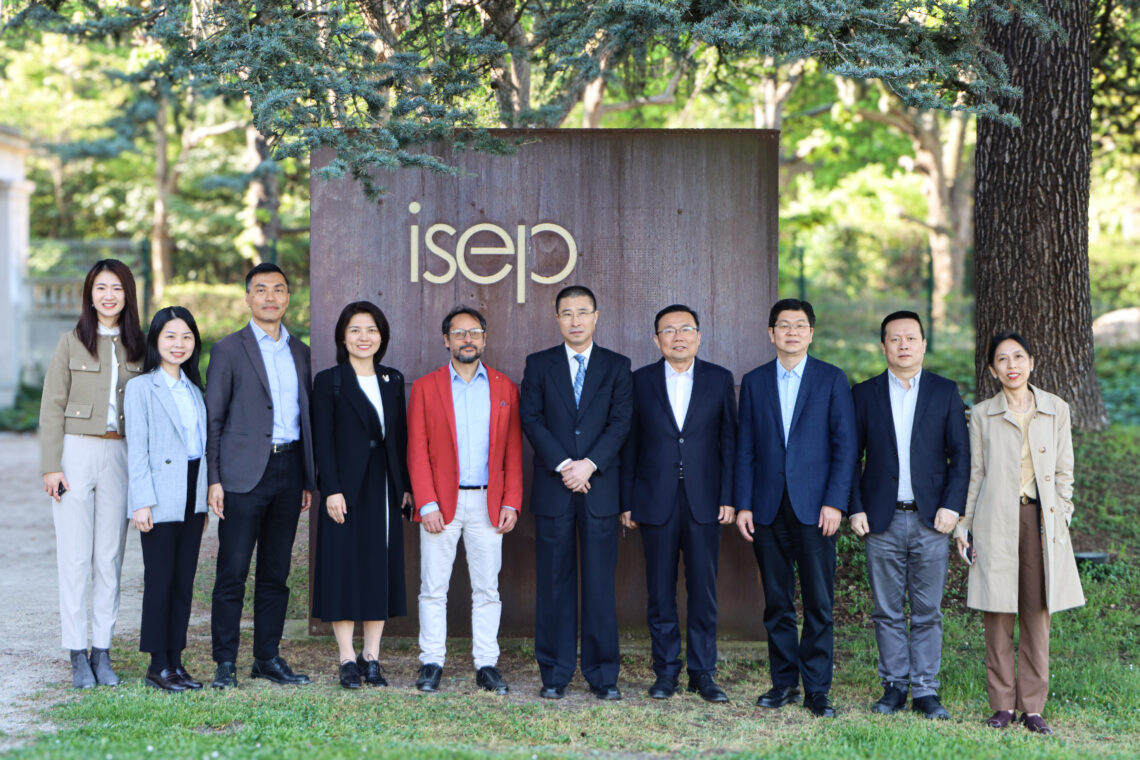
This defense illustrates Isep’s commitment to a responsible and human-centered digital future, where listening, excellence and engagement guide innovation. By proposing a physics-informed identification and authentication approach that is both robust and computationally efficient, Xuanbang CHEN’s work aligns with Isep’s ambition to develop reliable, transparent technologies adapted to real-world constraints. It also reflects the school’s mission to train engineers capable of combining scientific rigor with a positive impact on society.
PhD Defense of Xuanbang CHEN
9 December 2025
A look back at the PhD defense of Xuanbang CHEN: ‘Physics-based Digital Fingerprint of LEDs for Robust and Cost-effective Device Identification in VLC Systems’.
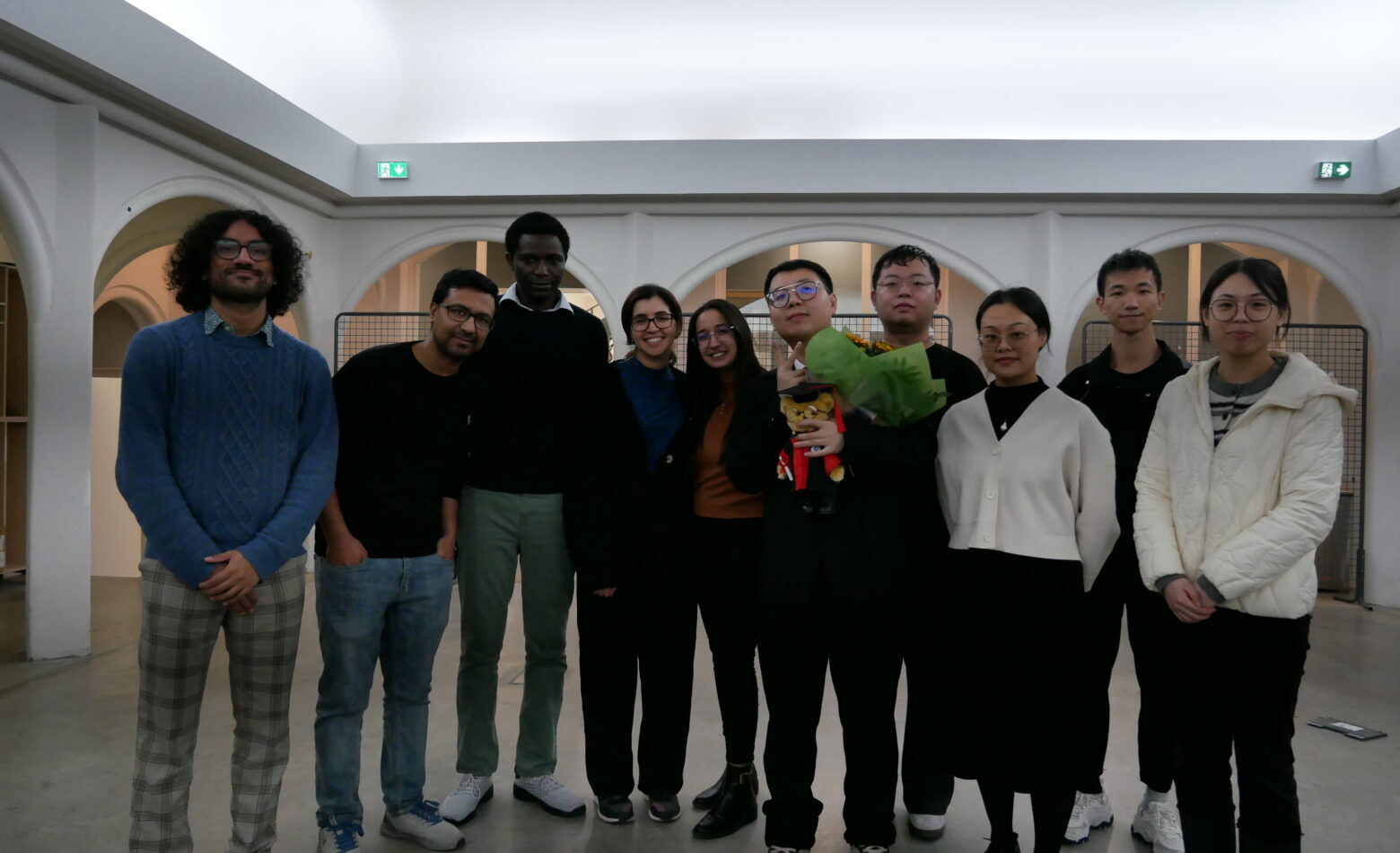
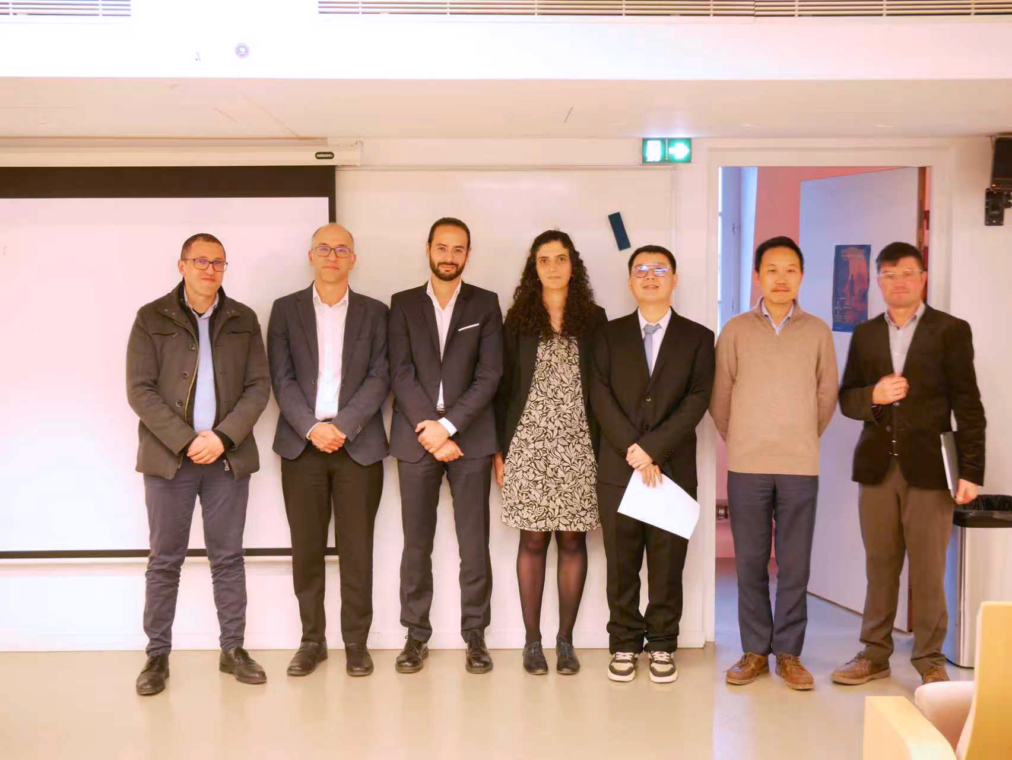
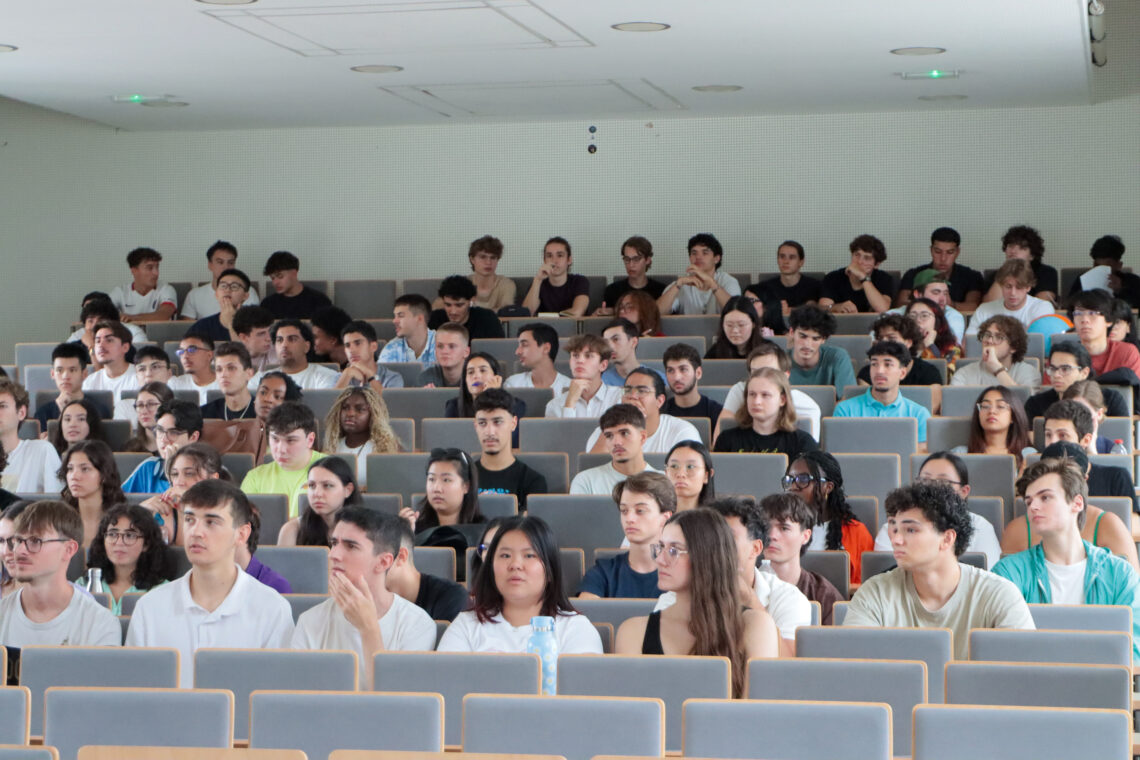
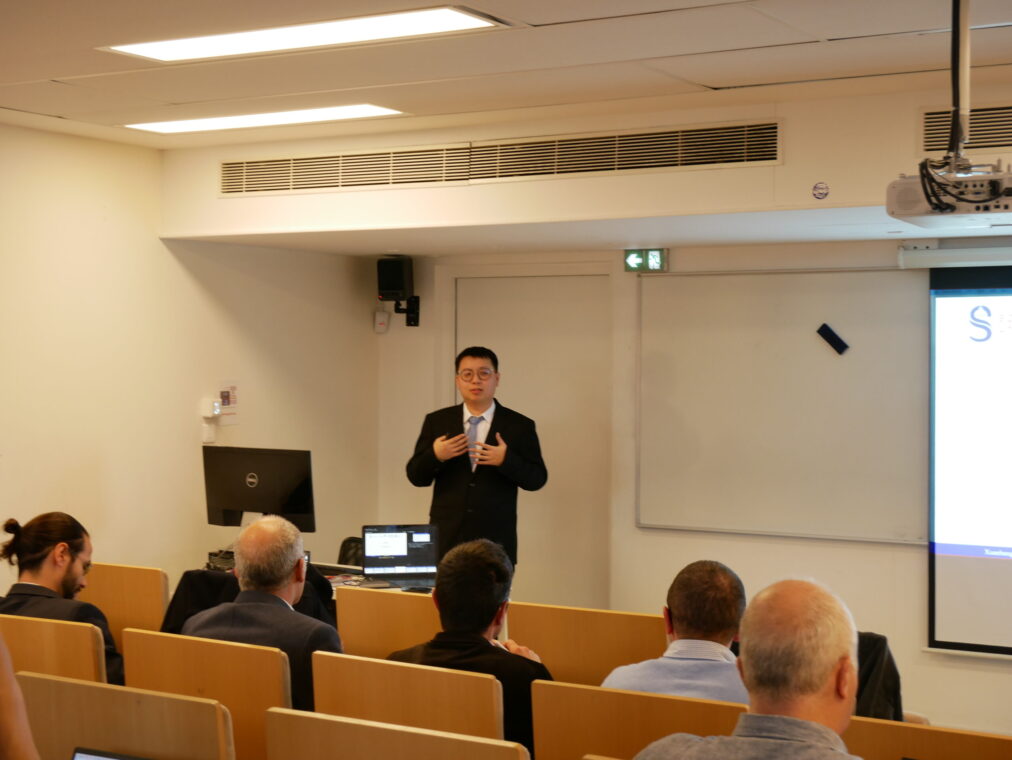
On November 7, 2025, Isep had the pleasure of hosting the PhD defense of Xuanbang CHEN, entitled ‘Physics-based Digital Fingerprint of LEDs for Robust and Cost-effective Device Identification in VLC Systems’. The event took place on the Issy-les-Moulineaux campus, in front of an attentive audience and a panel of expert jurors
An innovative PhD thesis addressing security challenges in VLC
At a time when 6G networks demand ever faster, more energy-efficient and more secure communications, Xuanbang CHEN’s PhD thesis explores an original approach to strengthening identification and authentication in visible light communication (VLC). By leveraging the physical fingerprint of LEDs—a unique signature inherent to each component—the thesis proposes a physics-informed method that is more interpretable and lighter than black-box approaches. It also proves more robust to temperature and bias current variations thanks to a drift-cancellation strategy.
This approach relies on an interpretable equivalent-circuit model to extract fingerprint features at the circuit level, while reducing computational load compared to deep learning methods. Experiments conducted on commercial LEDs highlight the impact of real-world operating conditions and the benefits of drift compensation in stabilizing performance. These results open promising perspectives for more reliable VLC systems, suited to the latency and energy constraints of next-generation networks.
Scientific Supervision
- Xun Zhang, Professor, Isep – PhD Supervisor
- Yuhao Wang, Professor, Nanchang University – Co-supervisor
A distinguished examination committee
- Dr. Iman TAVAKKOLNIA, University of Cambridge – Reviewer
- Prof. Camel TANOUGAST, University of Lorraine – Reviewer
- Prof. Dimitri GALAYKO, Sorbonne Université SIS – Examiner
- Prof. Lina MROUEH, Isep – Examiner
- Prof. Bastien BECHADERGUE, Université Paris-Saclay – Examiner